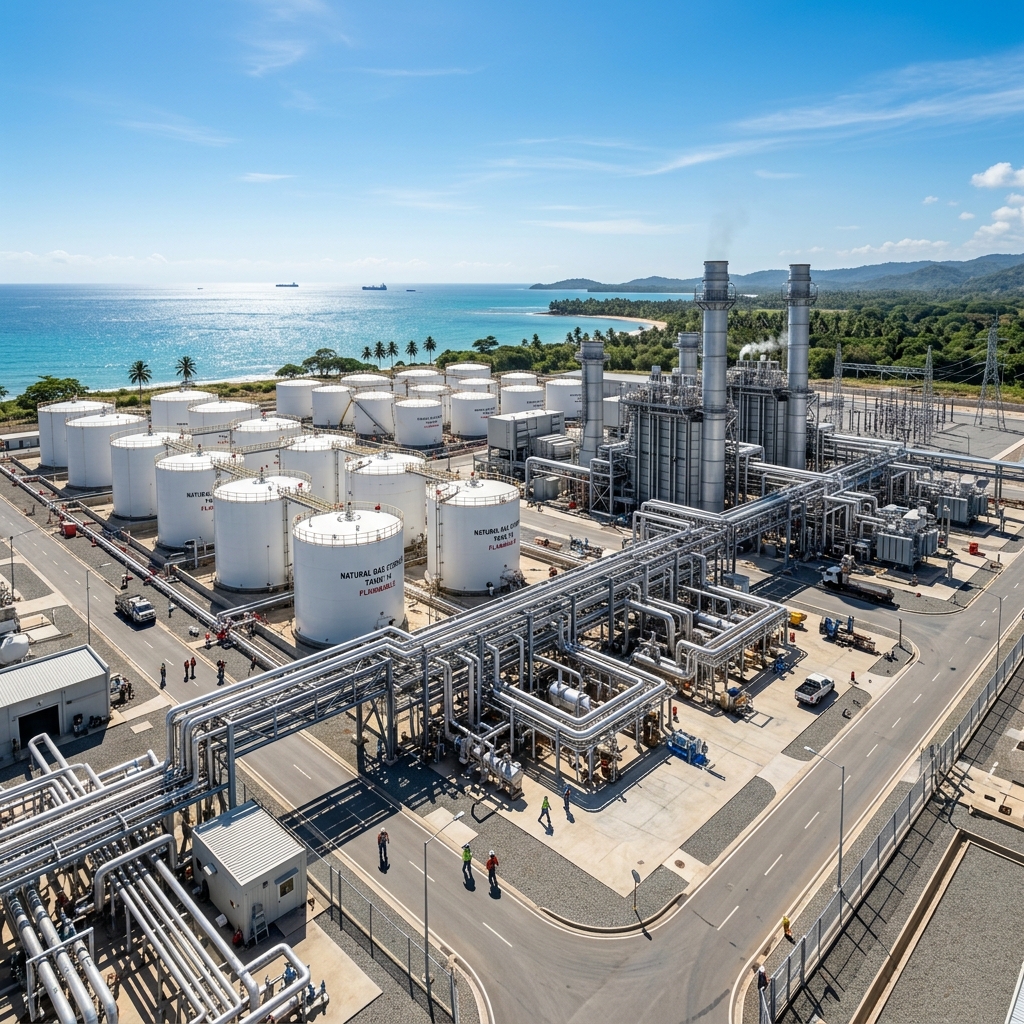
Natural gas is an efficient and relatively cleaner-burning fossil fuel used for electricity generation.
It acts as a key, flexible "transitional fuel" supporting renewable energy intermittency by quickly ramping power up or down. Modern combined-cycle plants (CCGT) reach over 60% efficiency by using gas and steam turbines.
Key Technologies and Processes
Combined-Cycle Gas Turbine (CCGT)
The most efficient method, utilizing both a gas turbine and a steam turbine to extract energy from exhaust heat.
Open-Cycle Gas Turbine (OCGT)
Typically used for peak load demand due to faster startup times, though less efficient than combined cycle.
Reciprocating Engines (RICE)
Fast-starting engines often used for grid balancing and backup.
Benefits and Role in Power Generation
High Efficiency
Modern plants convert natural gas to electricity with over 60% efficiency.
Flexibility and Reliability
Natural gas plants can start quickly, providing essential backup for intermittent renewable sources like wind and solar.
Lower Emissions
Produces less greenhouse gas than coal or oil, often acting as a bridge fuel towards lower-carbon energy systems.
Baseload Capability
Combined-cycle plants are highly reliable for consistent, around-the-clock electricity supply.
Environmental Considerations
While cleaner than coal, natural gas is still a fossil fuel, with methane leakage and emissions. It is widely used in Asia and elsewhere for energy security and to improve air quality.